
English
English
Views: 0 Author: Site Editor Publish Time: 2026-07-24 Origin: Site


When constructing digital operating rooms, attention is usually focused on obvious parameters such as 4K ultra-high definition image quality, medical-grade color reproduction, and elimination of surgical light artifacts.
Nevertheless, most people overlook a hidden core indicator that directly affects surgical teaching, remote consultation and intraoperative viewing experience — fast autofocus capability.
For conventional surveillance and recording equipment, slow focusing, focus hunting and temporary blurriness are merely visual nuisances.
However, for surgical video cameras, stuttering focus, lag and out-of-focus blur constitute critical risks: they may impair surgical judgment, disrupt teaching procedures and result in the loss of crucial imaging data.
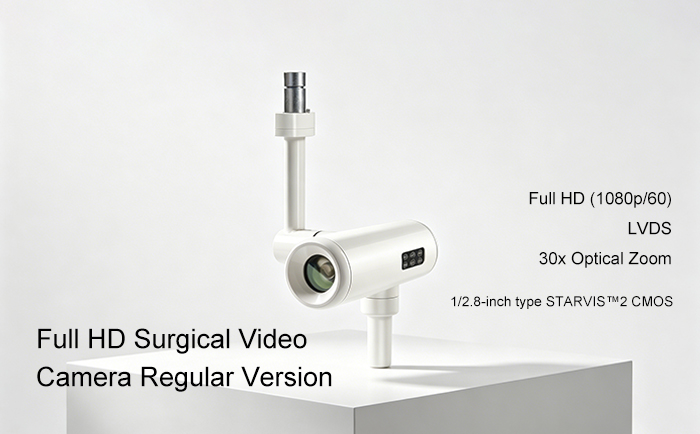
Fast, accurate and stable autofocus represents the baseline performance requirement for a professional surgical video camera.
Surgical procedures are dynamic, variable and intricate with no fixed pattern.
Intraoperative instrument movement, varying operating depths by surgeons, constantly shifting surgical areas, dressing obstruction, and deep minimally invasive manipulations through small incisions…
Every movement continuously changes the focusing distance of the camera.
Focus stuttering, delay and out-of-focus blur commonly lead to three major pain points:
1. Focus latency: The surgical field has already changed, while the lens adjusts focus sluggishly, causing loss of critical operational details.
2. Repeated focus hunting: Alternating sharp and blurry images from back-and-forth focusing severely
hinders observation and remote consultation assessments.
3. Near-range defocus and distant blurring: Instant focusing fails during deep minimally invasive operations and close-range suturing or hemostasis, rendering fine details indistinct.
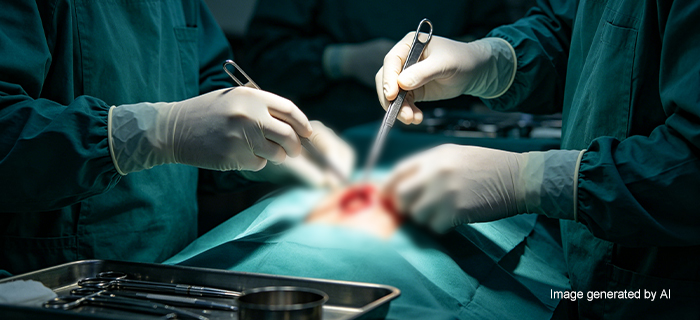
Surgical conditions evolve rapidly. Imaging recording must follow one principle: wherever the view moves, focus must track quickly, precisely and steadily.
1. Keep Pace with Surgical Workflow and Preserve Vital Details
Surgeries including general surgery, orthopedic reconstruction, minimally invasive intervention and dental implantology involve continuous close-range delicate operations and frequent shifts between near and far focal planes.
Surgical video cameras equipped with a high-speed autofocus system deliver rapid focus response.
Whether instruments enter the surgical field rapidly, superficial wounds are managed, or precise manipulation of deep tissues is performed, the lens locks onto focus instantly without latency, blurring or repetitive hunting. It fully captures subtle features such as blood vessels, nerves and suture textures.
2. Ensure Reliability for Remote Consultation and Intraoperative Guidance
An increasing number of grassroots surgeries and complex cases rely on real-time remote guidance from senior specialists.
Specialists diagnose conditions and direct operations entirely based on transmitted surgical field footage.
Fast and precise autofocus ensures consistently sharp, usable streaming images, delivering robust imaging support for telemedicine and inter-hospital collaboration.
3. Enable Stable Continuous Recording for Teaching Archiving and Research
In formal tertiary operating rooms and teaching hospitals, all major surgeries require full-length recording and archiving for departmental reviews, academic training and accumulation of research materials.
Surgical video cameras featuring advanced fast autofocus maintain steady continuous tracking and consistent clear footage. High-definition imaging is sustained from incision to closure, fully complying with archiving standards for digital operating rooms and clinical teaching requirements.
Fast autofocus solves the challenge of clear visibility. Yet another vital requirement exists in the operating room: authentic color rendering.
Operating room surgical lights deliver illuminance ranging from 10,000 lx to 150,000 lx, dozens of times brighter than ordinary environments. Under such intense illumination, ordinary cameras suffer from overexposure, color distortion and light artifacts.
Surgical video cameras with authentic color reproduction accurately capture chromatic information within the surgical field, helping surgeons visualize target areas clearly and distinguish tissue types and pathological changes. Optimized reproduction of key tones such as red directly improves surgical accuracy.
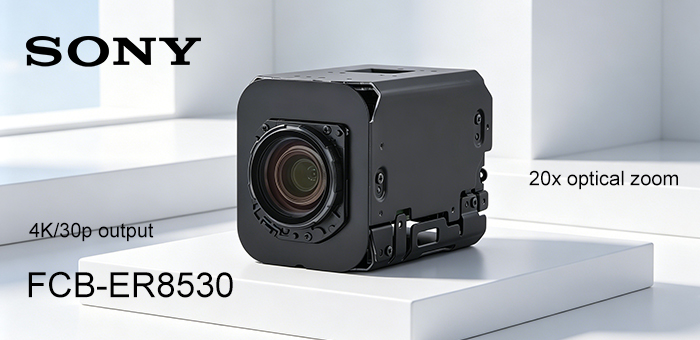
Sony integrated camera blocks feature instant, precise fast autofocus, authentic color reproduction under high brightness, and automatic strong light suppression, effectively tackling defocus and light artifact issues encountered with medical surgical video cameras.
The Sony FCB-ER8530 and FCB-EV9520L are widely deployed in medical operating rooms. Boasting 4K ultra-high definition and high-sensitivity 1080p performance respectively, paired with fast accurate autofocus and faithful color reproduction under high luminance, they provide rock-solid imaging assurance for surgical live streaming, demonstration teaching and video archiving.
Fast autofocus, seemingly a basic function, serves as the critical dividing line separating ordinary cameras from professional surgical video cameras.
Amid ongoing digital transformation in healthcare, selecting a professional surgical video camera with fast, precise and stable focusing tailored to surgical scenarios constitutes fundamental yet vital safeguards for surgical safety, clinical teaching and medical research.


