
English
English
Views: 0 Author: Site Editor Publish Time: 2026-09-22 Origin: Site


In backlit shooting, where tree branches or building outlines meet the sky, a ring of purple halo inexplicably appears at the edges of the image. This is the purple fringing phenomenon that gives the imaging field a real headache. Even high-end lenses can hardly completely avoid this optical artifact.
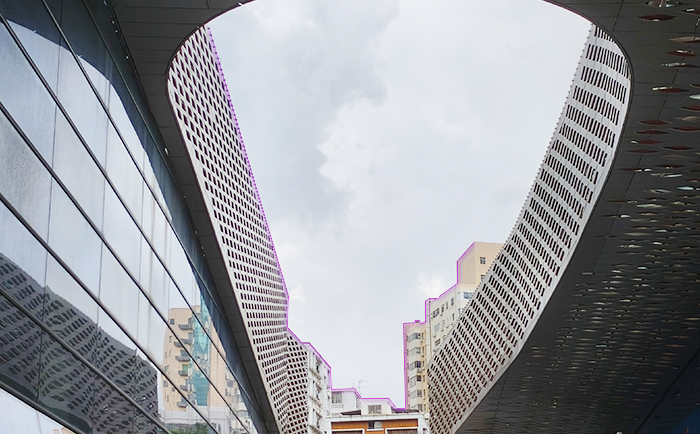
Purple fringing, technically known as chromatic aberration and also referred to as purple fringing, is a common artifact in optical imaging.
Its typical characteristic is: at the edges of high-contrast objects in an image (such as the edge of a dark object against a bright background, or the edge of a bright object against a dark background), a ring of purple, magenta, or blue-green halo appears that is unrelated to the object's own color.
This artifact not only damages the aesthetic appeal of the image but also reduces edge sharpness and causes color reproduction distortion—especially when shooting backlit tree branches, window frames, metal outlines, and sky boundaries, where purple fringing is almost inevitable [1].
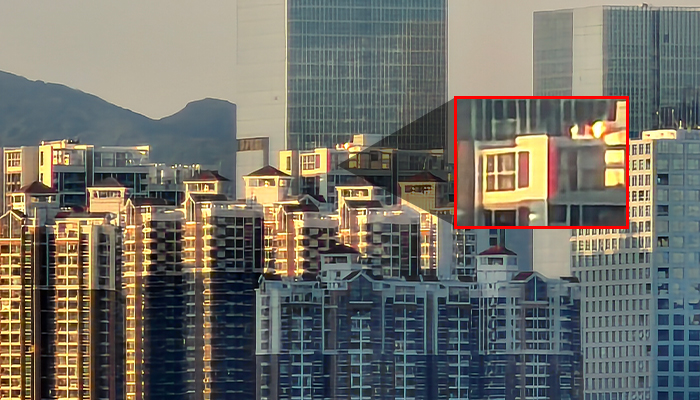
1. Axial chromatic aberration of the lens: the optical root of purple fringing
White light in nature is composed of red, green, and blue light of different wavelengths, and the lens elements of ordinary lenses have different refractive indices for light of different wavelengths. When strong backlight directly enters the lens, blue light (short wavelength) and red light (long wavelength) cannot converge precisely on the same imaging plane like green light, resulting in dispersion at high-contrast edges where light and dark meet. Among them, blue light shifts most noticeably, ultimately producing the purple edges we see in the image.
The larger the aperture and the larger the sensor, the more likely axial chromatic aberration is to occur. This is also the core reason why many full-frame cameras and professional camera modules are more prone to purple fringing in backlight.
2. Sensor microlens overflow: a secondary problem in photoelectric conversion
Today's CMOS sensors are equipped with microlenses above the pixels to increase light intake. When strong backlight enters, some light passes through the microlenses of adjacent pixels and overflows, causing abnormal overexposure in neighboring pixels. The photodiodes of blue pixels are more sensitive to strong light and are the first to experience signal saturation and overflow, ultimately forming magenta false color at the edges of the image—what we commonly call purple fringing.
This is also why many high-end lenses that use low-dispersion glass still show slight purple fringing under extreme backlight.
3. Dynamic range compression in high-contrast scenes: a visual effect amplified in post-processing
In backlit scenes, the brightness difference between light and dark in the image often exceeds 10 stops. To preserve shadow detail, the camera automatically raises shadow exposure. At this point, the slight dispersion false color originally hidden at the edges of the shadows is amplified at the same time. Faint edges that were almost invisible to the naked eye instantly become glaring deep purple edges.
1. Pre-shooting: Reduce purple fringing from the source
Cameras with true color reproduction: Today's Sony FCB series camera modules feature advanced ISP algorithms, better wide dynamic range, and highlight suppression. They can handle high-contrast light-and-dark environments well, achieving better true color reproduction and canceling most dispersion false color at the imaging stage.
Stop down the aperture by 1–2 stops: Axial chromatic aberration is most obvious at large apertures. After stopping down, dispersion at the edges of the lens is greatly reduced. When shooting backlit scenes, an aperture range of f/8–f/11 can effectively reduce the probability of purple fringing.

Avoid direct strong light entering the lens: Install a lens hood and adjust the camera position so that the strong light source does not fall directly on the light-dark boundary in the frame, reducing the conditions that produce dispersion from the root.
Lower highlight exposure: When shooting backlit scenes, appropriately reduce exposure by 0.3–0.7 stops to avoid complete overexposure and overflow in highlight areas, reducing pixel signal saturation and overflow from the photoelectric conversion stage.
2. Post-processing: Quickly remove residual purple fringing
Use manual adjustment of the defringe tool in post-processing software such as Lightroom and Photoshop to accurately remove most purple fringing.
Purple fringing is a physical phenomenon that is difficult to completely avoid in optical imaging. What we need to do is use reasonable shooting settings and hardware optimization to keep purple fringing within a range that is almost invisible to the naked eye, preserving the backlit atmosphere of the image while avoiding wasting a lot of time retouching in post-processing.
Q: When shooting backlit scenes, are large-aperture lenses more prone to purple fringing?
A: Yes. Large-aperture lenses let in more light. When strong light directly hits the lens elements in backlight, the axial dispersion effect of light of different wavelengths is amplified. Blue light and red light cannot converge precisely on the same imaging plane, ultimately forming more obvious purple fringing at the light-dark edges of the image. Stopping down the aperture by 1–2 stops can greatly reduce the probability of purple fringing.
Q: Can purple fringing only be removed through post-processing? Is there a way to avoid it directly at the shooting stage?
A: You do not need to rely entirely on post-processing. In addition to stopping down the aperture and installing a lens hood to prevent strong light from directly entering the lens, today's Sony FCB series camera modules have advanced ISP algorithms that automatically cancel most dispersion false color at the imaging stage, reducing purple fringing from the source and eliminating the need for secondary post-processing.


