English
English



1/2.8" Sony Starvis CMOS Sensor
1080p/60
1920x1080, 1280x720
20x
f= 5.2 mm- 104 mm
3.1℃-56.4℃
Yes
EIS
No
No
50(W) x 60(H) x 97(D)mm
232g
Color(1/30s, 78dB) : 0.01 lux, BW(1/30s, 78dB) : 0.001 lux
Color DSS(1/1s, 78dB) : 0.001 lux , BW DSS(1/1s, 78dB) : 0.0001 lux
Yes
1/2.3-inch CMOS
1/2.3-inch CMOS
1/2.3-inch CMOS
1/2.3-inch CMOS


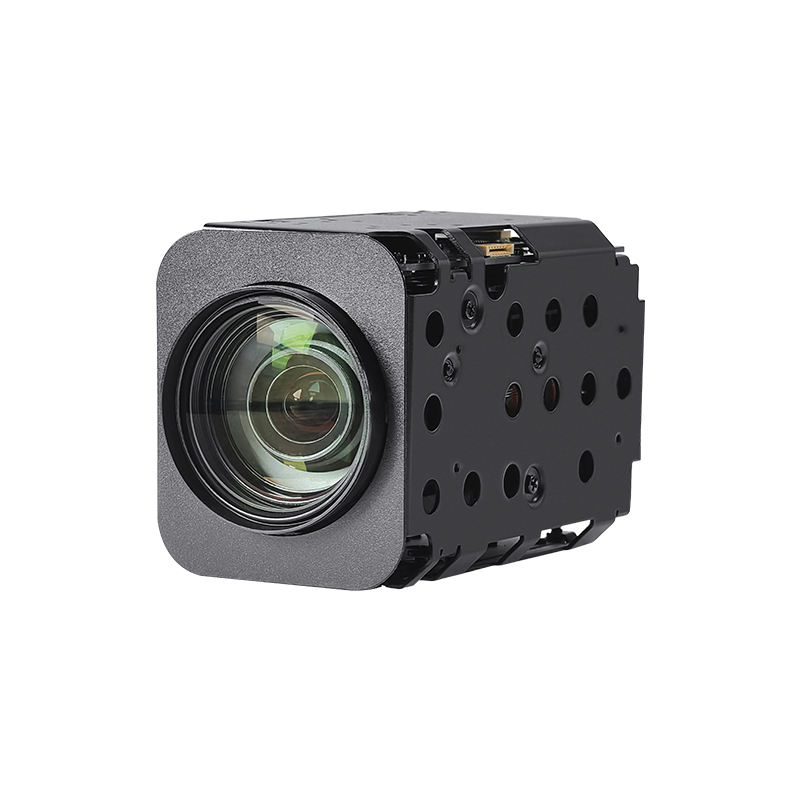
The VRS-HD5201, its 20x optical zoom capability enables clear monitoring of areas such as courtyards and doorways in home security scenarios; in commercial premises, it can provide all-round monitoring of the interior of stores; in the industrial field, it can also achieve precise monitoring of production areas and other locations.
The VRS-HD5201 provides reliable monitoring guarantees for different scenarios, making monitoring more intelligent and efficient. It is an ideal choice for security monitoring.
• 1/2.8" 2MP Sony Starvis CMOS sensor
• 1080p 60fps/30fps, 1080i 60fps, 720p 60fps/30fps
• 20x Optical Zoom(5.2mm ~ 104mm) & 32x Digital Zoom
• Day & Night (ICR)
• Real-time True WDR
• Digital Noise Reduction (2D+3D)
• Privacy Mask Function
• Digital Image Stabilization
• High Light Compensation
• Intelligent Motion Detection
• Defog Function
• Supports VISCA, Pelco-D/P Protocol
• Video Out : LVDS, EX-SDI, CVBS
Model NO. |
VRS-HD5201 |
Brand |
Volers |
Sensor |
1/2.8" Sony Starvis CMOS Sensor |
Output pixels |
1937 x 1097 (FHD)= 2.12M pixels |
Zoom |
20x Optical Zoom, 32x Digital Zoom |
Focal Length |
f= 5.2 mm- 104 mm, F1.5 - 3.5 |
Image formats |
Digital : 1080p/60(50)fps, 1080p/30(25)fps, 1080i/60(50)fps,720p/60(50)fps,720p/30(25)fps Analog : 700TVL |
||
Minimum illumination |
Color(1/30s, 78dB): 0.01 lux , BW(1/30s, 78dB): 0.0011ux Color DSS(1/1s, 78dB): 0.001 lux , BW DSS(1/1s, 78dB): 0.0001 lux |
||
Video Output |
HD : LVDS, EX-SDI,Analog SD : CVBS |
||
Other functions |
Digital Image Stabilization, Intelligent Motion Detection, Defog Function, High Light Compensation |
||
Dimensions |
50(W) x 60(H) x 97(D)mm |
||
Weight |
Approx 232g |
||
Drone pod
Full HD Surgical video camera
PCB inspection
VRS-HD5201 |
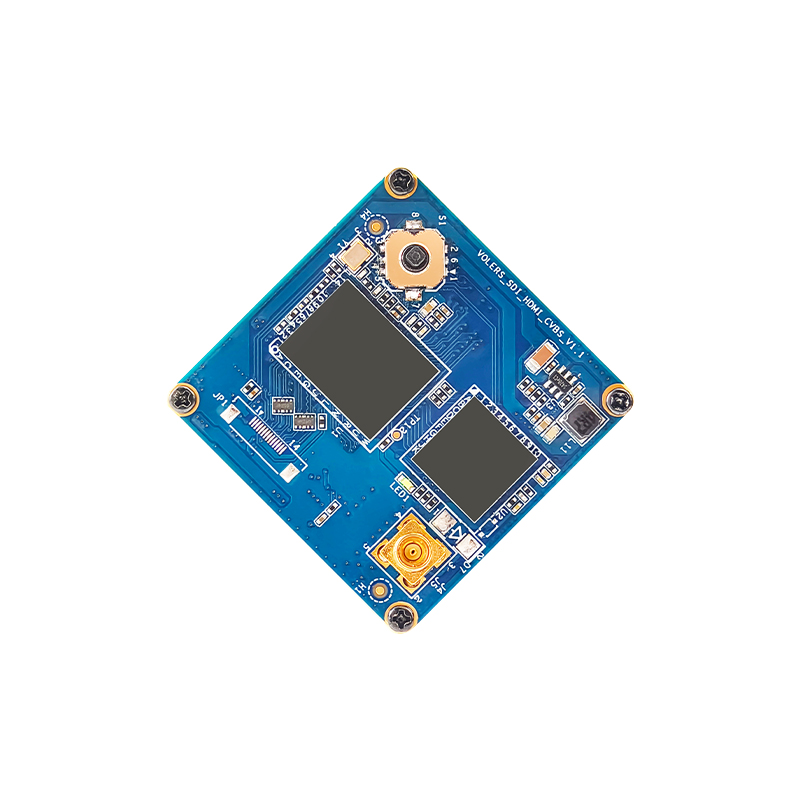
Compatible Camera Interface Board | Customized Integrated Solutions | ||
1/2.8" Sony CMOS Sensor Effective pixels: approx. 2.12MP |
+ |
RJ45 Ethernet interface Network Video output |
= |
Volers VRS-HD5201 + MIPI or LVDS to IP camera Interface Board |
Lens: 20x Optical Zoom, 32x Digital Zoom |
+ |
Mini MCX RF Interface Lvds to 3G-SDI Output |
= |
Volers VRS-HD5201 + 3G-SDII Interface Board |
Video Output: LVDS, EX-SD and CVBS Output pixels (H × V): 1937 x 1097 |
+ |
HDMI-compatible Type A interface HD-HDMI video output |
= |
Volers VRS-HD5201 + HD-HDMI Compatible Interface Board |
Minimum illumination: color image output under 0.01Lx low illuminations |
+ |  USB3.0 Interface Lvds to USB3.0 video Output |
= |
 Volers VRS-HD5201 + LVDS to USB3.0 Video Capture Interface Board |
Wide dynamic, Electronic image stabilization |
+ |  USB3.0 Type-C Interface Lvds to Type-C Output |
= |  Volers VRS-HD5201 + LVDS to USB3.0 Type-C Video Capture Interface Board |
Day and night switch Privacy Mask Function |
+ |
Two BNC Female and HDMI Compatible Type-A Interface 3G-SDI, CVBS and HDMI-Compatible Sync-output |
= |
Volers VRS-HD5201 + SDI/CVBS/HDMI-Compatible 3-in-1 Multi-functional Interface Board |
Compact and Lightweight Body Camera control: VISCA, Pelco-D/P |
+ |
LVDS socket and MCX female Interface 3G-SDI, CVBS and HDMI-Compatible Sync-output |
= |
Volers VRS-HD5201 + Mini SDI/CVBS/HDMI-Compatible Interface Board |
Size: 50(W) x 60(H) x 97(D)mm Weight: Approx 232g |
+ |
LVDS Socket and FPC Interface MIPI CSI-2 Version 1.00 output |
= |
Volers VRS-HD5201 + LVDS to MIPI Interface Board |
Q1: Can the VRS-HD5201 be applied to Volers Full HD surgical video cameras?
A1: Since Volers Full HD surgical video cameras feature a fixed mold design, the compatibility with camera modules mainly depends on the module’s dimensions and output interface. The VRS-HD5201 has a compact size of 50(W) × 60(H) × 97(D)mm, which perfectly fits the mold specifications of standard Volers Full HD surgical video cameras.
In addition, the LVDS output interface of the VRS-HD5201 can be paired with a 3G-SDI interface board, delivering high-definition, real-time images for remote surgical training systems.
Q2: Can the Full HD Surgical Camera Equipped with VRS-HD5201 Effectively Resolve the Spotlight Issue from Shadowless Lights?
A2:In medical settings, shadowless lights are essential for surgical procedures. However, surgical footage often suffers from local overexposure and distortion, with the spotlight issue being particularly prominent.
This phenomenon poses significant negative impacts. It not only hinders remote consultations and medical teaching outcomes but, more critically, may interfere with doctors’ accurate diagnosis of minute pathological changes. The spotlight tends to spread when the camera lens is zoomed in, resulting in the loss of critical details in the core surgical field—posing a major barrier to the advancement of precision medicine.
To address shadow casting, a multi-head shadowless light design is currently widely adopted. While this reduces shadows, it introduces a new challenge: spotlight superposition. In areas where spotlights overlap, excessive brightness or uneven light intensity distribution may occur, further increasing the visual strain on medical professionals.
Our independently copyrighted full HD surgical camera is equipped with specialized control software for shadowless lights, which can mitigate the spotlight issue during surgery to a certain extent. However, the VRS-HD5201 delivers average true-to-life color reproduction under high-brightness conditions. It is better suited for demonstration systems across industries including automotive repair, apparel, culinary arts, CNC machining, beauty & hairdressing, healthcare, rail transit, electrical & electronics, and fine arts.
To completely resolve the spotlight issue in surgical settings and achieve high standards of true-to-life color reproduction, it is necessary to address the root cause by selecting the right camera module. We recommend Sony integrated camera modules that deliver exceptional true color reproduction under high brightness: the FCB-EV9520L and FCB-ER8530.
Q3: What remote control protocols does the VRS-HD5201 support? How can parameters such as zoom, focus, and white balance be adjusted?
A3: The VRS-HD5201 supports VISCA, PELCO-D, PELCO-P, and other mainstream remote control protocols, making it compatible with most video control solutions on the market. The device can be paired with encoding control boards compatible with the above protocols and covers SDI, IP, HDMI, USB, MIPI, and other interface types to meet signal output requirements in different scenarios.
The control link communicates through RS-485, RS-232, TTL-232, and other serial interfaces. The host computer or control terminal issues the corresponding command packets according to the protocol specifications, enabling stable remote adjustment of core image parameters such as zoom, focus, and white balance. The entire control solution offers flexible deployment and is suitable for security surveillance, medical, industrial inspection, low-altitude inspection, video conferencing, and other integration projects, making it easy for developers to quickly integrate it into secondary development systems.
Q4: The VRS-HD5201 only supports PAL frame rates. If this zoom camera module is used in Japan, which uses NTSC, will flicker occur?
A4: Yes. The VRS-HD5201 only supports PAL formats/frame rates (1080p/60, 1080p/50, 1080p/30, 1080p/25, 720p/60, 720p/50, 720p/30, 720p/25, etc.). When used in Japan’s 60 Hz mains environment, indoor scenes with AC-powered light sources such as LEDs and fluorescent lamps will likely experience flicker and rolling black bands; outdoor natural-light environments will not have flicker problems.
How can the flicker problem be solved?
The root cause of the flicker is that the camera module’s exposure timing is fixed for PAL and does not match the lighting frequency under Japan’s NTSC system. The module itself cannot switch to NTSC.
Prefer flicker-free high-frequency light sources; however, limited by the module’s native PAL timing, this solution can only mitigate the issue and cannot completely eliminate it. If the project has high requirements for image stability, it is recommended to evaluate the situation in advance or choose a zoom camera module that supports NTSC.
| Image | Product Name |
|---|---|

|
PCB-UD101 LVDS To USB3.0 Video Capture Interface Board |

|
VRS-UD350 MIPI or LVDS to IP Camera Interface Board |

|
PCB-HD014 3G-SDI Interface Board |

|
PCB-HD111 HD-HDMI Compatible Interface Board |

|
PCB-HD305 LVDS to MIPI Interface Board |

|
PCB-HD201 SDI/CVBS/HDMI-Compatible 3-in-1 Multi-functional Interface Board |

|
PCB-UD102 LVDS to USB C Video Capture Interface Board |