
English
English
Views: 0 Author: Site Editor Publish Time: 2026-09-23 Origin: Site


Robotics original equipment manufacturers face a massive engineering challenge today. They must design vision systems balancing strict Size, Weight, and Power constraints. These systems must also maintain uncompromising image quality. Standard machine vision cameras often lack integrated zoom mechanisms or autofocus drives. Conversely, consumer-grade cameras fail entirely regarding industrial durability and critical interface availability. We developed this guide to bridge this precise engineering gap. It provides a stringent technical evaluation framework for modern robotic integrators. You will learn how to select a block camera module tailored specifically for robotic payloads, autonomous ground vehicles, and inspection drones. We will explore practical methods to assess interface integration hurdles, thermal management risks, and data latency budgets. You will also discover the distinct operational differences between high-resolution demands and real-time navigation requirements. Ultimately, this structured approach helps you deploy ruggedized, high-performance vision hardware seamlessly into any robotic chassis.
Standardizing on the VISCA protocol allows for seamless command and control across different robotic platforms.
Choosing between 4K and Full HD requires a strict audit of the system’s telemetry bandwidth and thermal management capabilities.
Interface conversion (e.g., LVDS to IP or MIPI) is the primary integration hurdle for OEM engineering teams.
Optical image stabilization (OIS) and Wide Dynamic Range (WDR) are non-negotiable for mobile robotics in dynamic outdoor environments.
Engineering teams traditionally faced painful choices building robotic vision systems. Combining a standalone CMOS sensor, a custom image signal processor, and separate motorized lenses requires massive research and development. It demands intense optical axis calibration. Your team must also maintain complex custom drivers continuously. Integrated block cameras package the sensor, processor, and optical zoom lens into one unified chassis. This baseline requirement simplifies hardware layout drastically. It actively accelerates your time to market while reducing mechanical failure points.
Controlling complex payloads requires deterministic communication. The VISCA protocol standardizes pan, tilt, zoom, and deep camera parameter controls. Writing software commands via VISCA means engineers rarely rewrite core driver code during subsequent hardware upgrades. It creates a universal language for robotic vision telemetry. We see many integrators choose a Sony FCB Optical Zoom Camera precisely because VISCA support remains rock-solid across multiple hardware generations. This consistency streamlines Robot Operating System node integration.
Commercial stability matters immensely for industrial robotics. Production runs often span five to ten years. Sourcing consumer-grade imaging modules introduces severe supply chain obsolescence risks. The industry leans heavily on established OEM block modules for commercial stability. They guarantee long-term availability, predictable lifecycle management, and consistent physical form factors. While alternative brands exist, these specific modules function as the industry benchmark for dependable commercial integration.
Best Practice: Always validate VISCA command sets during your initial prototype phase. Ensure your flight controller or main compute unit interprets telemetry and deep parameter controls accurately before finalizing the PCB design.
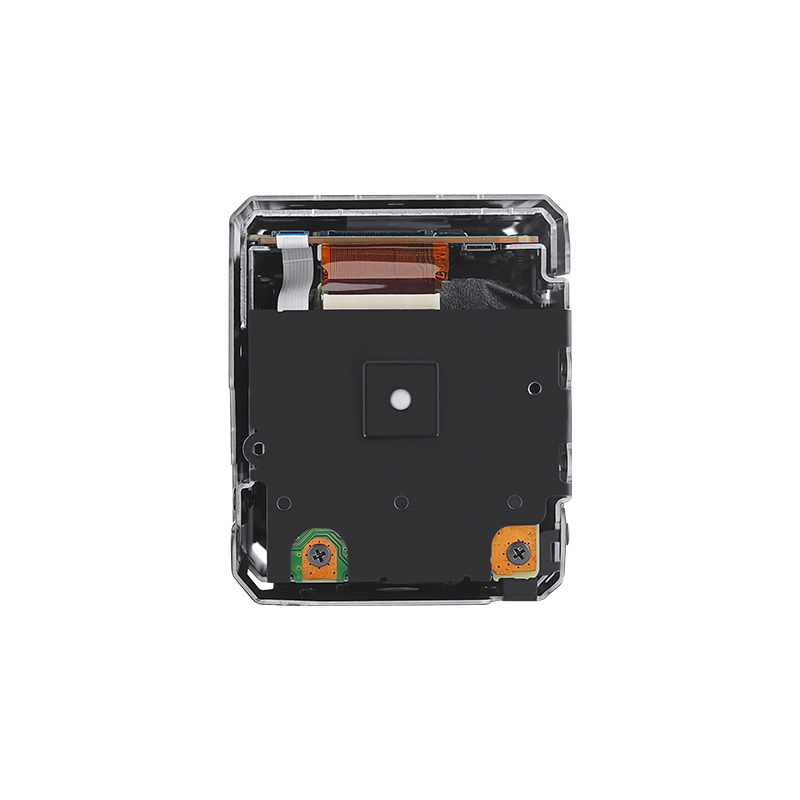
Size, weight, and power dictate every decision in mobile robotics. A heavier payload directly reduces drone flight times. Increased power draw actively drains battery reserves on autonomous ground vehicles. You must scrutinize the module footprint to ensure it fits aerodynamic gimbals or enclosed ground chassis. Integrating a Sony Optical Zoom Block Camera helps centralize imaging tasks. It eliminates the need to stack multiple discrete sensors, thereby reducing overall system mass.
Mobile robots operate in chaotic physical spaces daily. High-frequency vibrations from drone rotors or drive trains ruin image clarity. Optical Image Stabilization physically counteracts these micro-movements using internal gyros and floating lens elements. This mechanism preserves sharp telemetry for machine learning algorithms. Furthermore, lighting conditions change rapidly outdoors. A robot might drive from a dark warehouse directly into blinding sunlight. Wide Dynamic Range processes these extreme contrasts instantly on the hardware level. It prevents blown-out highlights or crushed shadows in your live video feed.
Rapid movement demands lightning-fast autofocus capabilities. When an inspection drone flies past a wind turbine blade, the camera processor must adjust depth mapping instantly. Sluggish autofocus creates blurry frames during critical automated inspections. Modern block cameras utilize advanced phase-detection autofocus. This technology tracks moving targets seamlessly, even when the robotic platform moves at high speeds.
Common Mistake: Do not ignore vibration isolation mounts. Even the best optical stabilization systems fail if you mount the camera rigidly directly to a vibrating robotic frame. Always incorporate dampening materials.
Higher resolution always looks appealing on a specification sheet. However, pushing massive video streams through a closed robotic system incurs a severe bandwidth tax. Transmitting ultra-high-definition video requires aggressive data compression. This encoding process consumes valuable central processor cycles. It also increases battery drain and generates significant internal heat.
You should specify a Sony 4K Optical Zoom Camera for applications prioritizing supreme visual detail. They excel on stationary robotic machine-tending arms and high-altitude unmanned aerial vehicles. High resolution allows for deep digital crop-in functionalities. You can zoom digitally into a specific sector without losing critical inspection detail. This proves invaluable when searching for microscopic stress fractures on critical infrastructure.
Conversely, a Sony Full HD Zoom Camera remains the smarter choice for highly dynamic platforms. Specify them for real-time navigation tasks and low-latency remote teleoperation. Enclosed robot chassis often lack active cooling fans. Full HD modules generate significantly less heat. This lower thermal output minimizes system shutdown risks during extended outdoor operations in harsh summer environments.
We recommend adopting a skeptical, engineering-led approach to resolution. Never over-specify your imaging sensor simply for marketing purposes. If your main edge computing unit cannot process ultra-high-definition feeds smoothly, you only introduce harmful transmission latency.
Connecting your vision module requires careful hardware planning. Most OEM block cameras output a native Low-Voltage Differential Signaling format. Modern computing boards, like the NVIDIA Jetson series, do not accept raw differential signals directly. You must integrate a dedicated interface board to translate this native output into usable formats. Common conversions include Ethernet, HDMI, SDI, or MIPI CSI-2. The MIPI interface proves highly effective for edge AI processing. It provides a direct, low-overhead path straight to the system-on-chip.
Remote teleoperation relies entirely on instantaneous visual feedback. Every interface conversion step adds milliseconds of latency to your pipeline. IP encoding can delay the video feed by 100 to 300 milliseconds. When an operator drives a ground vehicle at 20 miles per hour, a 200-millisecond delay means the robot travels several feet completely blindly. You must budget latency carefully across the sensor capture, interface translation, and network transmission stages.
Robotics frequently operate in harsh environments requiring fully sealed, passively cooled housings. Trapping a high-performance imaging module inside a sealed metal box invites overheating. You must design explicit thermal pathways to pull heat away from the camera processor. Connect the module directly to the external chassis using high-quality thermal pads. This technique turns the entire external robot body into a giant passive heatsink.
Matching hardware capabilities to your specific application dictates project success. Different robotic platforms face entirely different physical and environmental constraints. Let us break down the hardware priorities based on specific platform categories.
UAVs and Inspection Drones: Prioritize the lowest possible payload weight to maximize flight times. Seek high optical magnification capabilities, such as 30x optical reach. Rapid autofocus remains mandatory for fast aerial asset inspections.
UGVs and Ground Crawlers: Focus heavily on extreme low-light performance. Look for larger sensor pixel pitches. Global shutter sensors help eliminate rolling shutter jelly artifacts during bumpy terrain traversal. Ruggedized interface cable retention matters most here.
Machine Tending and Stationary Arms: Prioritize macro capabilities and close-focus minimum distances. Maximum spatial resolution drives precise automated defect detection on factory assembly lines.
Camera Selection Matrix by Robotic Application
| Application Type | Top Physical Priority | Ideal Sensor Feature | Critical Requirement |
|---|---|---|---|
| UAVs and Drones | Lowest Total Weight | Fast Phase-Detect AF | High Magnification (30x+) |
| UGVs and Crawlers | Vibration Resistance | Large Pixel Pitch / Global Shutter | Rugged Interface Retention |
| Stationary Robotic Arms | Maximum Resolution | Macro / Close-Focus Capable | Uncompressed Video Output |
Once you identify your core specifications based on this matrix, you must plan your next logical procurement step. We recommend sourcing a complete development evaluation kit immediately. This procurement should include the specific hardware interface board your primary compute unit requires. A physical dev kit allows your software engineering team to begin validating VISCA commands, driver compatibility, and AI inference models months before the final custom PCB arrives.
Selecting the perfect zoom block camera involves balancing extensive optical reach against your robot's compute and power budget. It demands a rigorous understanding of your operational environment and data pipeline limitations.
Always align your sensor resolution choices with your platform's actual thermal dissipation and data processing capabilities.
Evaluate interface conversion compatibility early to secure low-latency video transmission for remote operations.
Test optical image stabilization and autofocus responsiveness extensively under real-world motor vibration conditions.
Procure an evaluation kit paired with the correct interface board to accelerate software integration testing immediately.
We encourage engineering teams to request a dedicated technical consultation to discuss specific payload constraints in depth. Download a comprehensive comparison matrix or request a development evaluation kit to accelerate your robotics prototyping schedule today.
A: Optical zoom uses physical glass lens movements to magnify an image. This preserves true sensor resolution and critical details necessary for AI inference. Digital zoom merely enlarges and interpolates existing pixels. This software trick degrades image sharpness heavily and significantly reduces automated inspection accuracy.
A: These camera modules typically output a raw LVDS signal. To connect them to an NVIDIA Jetson, you must implement a dedicated hardware interface board. This intermediate board converts the native LVDS output into MIPI CSI-2 or an IP video stream, allowing the Jetson processor to ingest the footage.
A: While they feature exceptional low-light sensitivity, they cannot see in absolute darkness independently. True zero-light robotic operation requires active IR illumination combined with a mechanical IR-cut filter removal feature. Many advanced FCB models support this day/night switching capability natively.


