
English
English
Views: 0 Author: Site Editor Publish Time: 2026-10-04 Origin: Site


Compact electro-optical pods must balance HD imaging, electronic image stabilization, and day/night imaging capabilities while strictly controlling size and weight and reducing overall system integration difficulty. The combination of the Tamron MP3010M-EV and the HD-HDMI Compatible interface board has become a highly cost-effective option for compact electro-optical pods.
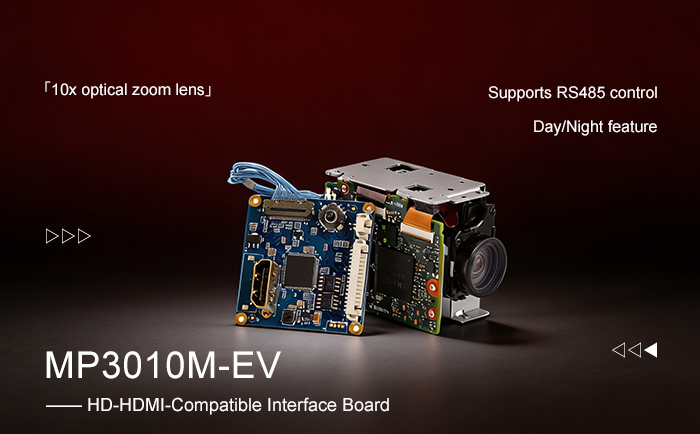
The Tamron MP3010M-EV + HD-HDMI Compatible interface board offers a noteworthy approach: it integrates video encoding and device control functions on the same control board, adapting to the compactness requirements of small electro-optical pods in a highly integrated manner. The value of this solution lies not in leading on any single specification, but in bringing HD imaging and transmission control together, helping system developers reduce intermediate links and improve system integration and reliability.
First, in terms of imaging capability: 1080p/60 output and high-definition imaging in complex environments.
The Tamron MP3010M-EV uses a 1/2.8-inch Sony STARVIS CMOS sensor, with color sensitivity of 0.1 lx and black-and-white sensitivity as low as 0.025 lx. It supports ICR day/night switching and can produce clear images day and night.
It weighs only 70 g and measures 33 × 43 × 59 mm, making it small and lightweight and greatly reducing the payload pressure on compact electro-optical pods.
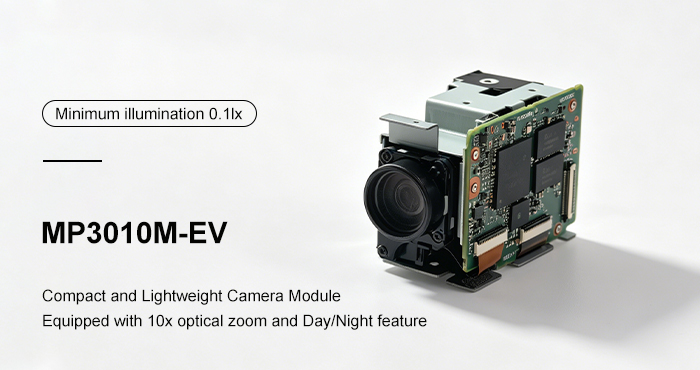
Its 10x optical zoom can capture both distant panoramic views and close-up details, meeting visual capture needs at different distances. It also supports image-processing functions such as defog, 3D noise reduction, and wide dynamic range, enabling it to output high-definition images in the complex environments of UAV aerial photography and inspection.
It supports LVDS video output and is compatible with the VISCA protocol, allowing remote control of all parameters such as zoom, focus, white balance, and gain. [1]
Second, from the video link perspective, HDMI input and encoding capability directly match the pod's image output requirements.
The optical module of a compact electro-optical pod usually outputs HD video signals through an HDMI interface. The HD-HDMI Compatible interface board can directly receive this signal, complete compression encoding, and then pass it to the video transmission link for sending to the ground end. Eliminating an extra signal conversion step means less latency and loss in the video link and better assurance of image quality. For operators who rely on real-time imagery, stable, low-latency video return is a prerequisite for accurate judgment.
Third, from the control link perspective, integrated control interfaces make gimbal and camera actions more coordinated.
Actions such as zoom, pitch, and yaw in a compact pod require smooth communication between the control board and the gimbal motors and camera module. The Tamron MP3010M-EV + HD-HDMI Compatible interface board integrates this control capability, allowing video encoding and gimbal control to share one hardware platform and reducing protocol adaptation work between different modules. Development teams no longer need to debug two separate systems independently, so joint debugging difficulty and the probability of errors are correspondingly reduced.
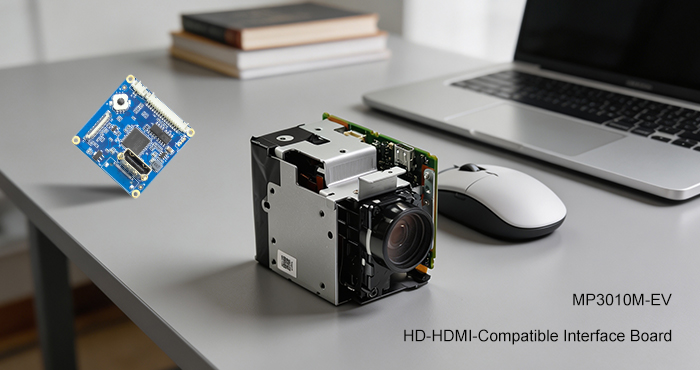
Fourth, from a structural design perspective, size and power consumption control are key advantages of miniaturization.
Internal space in a compact pod is very limited. Each additional standalone board requires corresponding consideration of mounting structure, heat dissipation, and cable routing. An integrated solution physically reduces the number of boards and connectors, freeing up more design margin for the optical module, vibration-damping structure, and gimbal mechanism. At the same time, fewer components and a simpler circuit also reduce cumulative power consumption, which is particularly important for battery-powered small UAV platforms.
Fifth, from an engineering implementation perspective, the integrated solution shortens development and debugging cycles.
Based on the HD-HDMI Compatible interface board's support for both VISCA and PELCO-D/P protocols, the vast majority of gimbals and ground stations on the market can connect directly. It supports presets and power-off memory, so after debugging is completed, it can work immediately when powered on. This reduces software development costs for system manufacturers and shortens time to market.
It is suitable for compact UAV electro-optical pods and micro multi-rotor UAVs, and is used for small- and medium-sized power tower inspections, photovoltaic power plant inspections, river and reservoir patrols, forest fire warning, and field search and rescue. In short- and medium-range observation scenarios, it performs panoramic observation plus local detail zoom; the HDMI output connects to airborne video transmission and returns images to the ground station in real time.
The Tamron MP3010M-EV + HD-HDMI Compatible interface board enables coordinated operation of HD video transmission and stable control within a limited structural space. It reduces system complexity, improves integration and reliability, and also creates conditions for miniaturization and rapid delivery of complete systems. For development teams planning or iterating compact electro-optical pod products, including this type of integrated solution in their evaluation is a direction worth serious consideration.
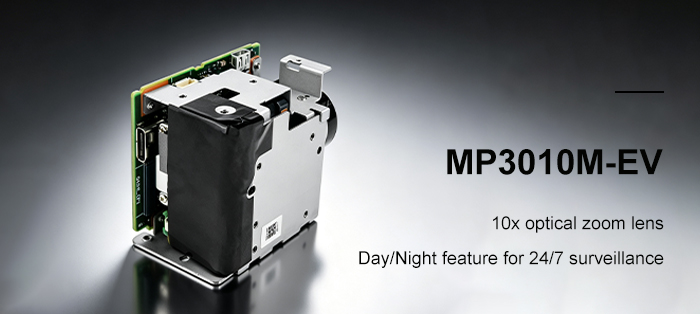
Q: What types of electro-optical pod products is the Tamron MP3010M-EV + HD-HDMI Compatible interface board suitable for?
A: This bundled solution is mainly aimed at compact electro-optical pods with high requirements for size and integration, especially UAV-mounted and security-monitoring equipment that needs to output HD video through an HDMI interface and wants to manage encoding and control functions in a unified way. Specific compatibility should be confirmed based on the product's interface definitions and structural space.
Q: What practical benefits does using the HD-HDMI Compatible interface board mainly bring?
A: The main benefits are reflected in three aspects:
First, it reduces the number of boards and cables, saving internal space;
Second, it reduces protocol adaptation and joint debugging work between modules, shortening the development cycle;
Third, after system complexity is reduced, overall reliability is easier to ensure.
[1]
MP3010M-EV
https://tamron.com.cn/cctvlens/products/MP3010M-EV.shtml


